
StreptaClick® HRP
for Multiplex Immunofluorescence
Heat-free multiplex TSA
Tyramide signal amplification (TSA) is a powerful method for enzymatic signal amplification, enabling bright fluorescent detection of cell markers and low-abundance targets. However, classical multiplex TSA workflows are often time-consuming and difficult to scale up beyond four antibodies due to harsh antibody stripping steps between cycles, such as boiling.
Heat-free multiplex TSA with StreptaClick® HRP overcomes these limitations by eliminating secondary antibodies and heat-based antibody stripping altogether. In this workflow, HRP is attached through StreptaClick® directly to the primary antibody and is specifically inactivated between staining cycles with a proprietary HRP block buffer. This heat-free approach preserves tissue morphology and epitope integrity across multiple cycles.
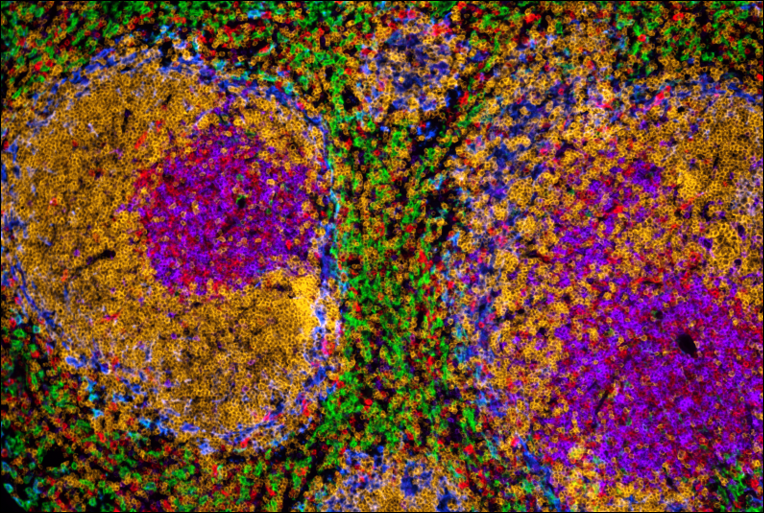
How it works
Direct attachment of HRP to the primary antibody
The StreptaClick® HRP kit is based on a monovalent streptavidin that rapidly and firmly binds biotinylated primary antibodies in solution without causing antibody aggregation. By pre-mixing biotinylated primary antibodies with StreptaClick® HRP, you can generate HRP-labeled primary antibodies in minutes without wash steps. The StreptaClick® labeling reaction is highly efficient and supports labeling of any antibody volume, even down to microliters. This is particularly useful when setting up new multiplex panels.

Inactivation of HRP activity
The kit also includes a unique HRP block buffer that efficiently inactivates HRP activity between cycles without compromising the tissue. This replaces harsh boiling/heat stripping and helps preserve tissue morphology and epitopes across staining cycles. Note: the block buffer is not based on hydrogen peroxide, as hydrogen peroxide is tissue-damaging at higher concentrations.
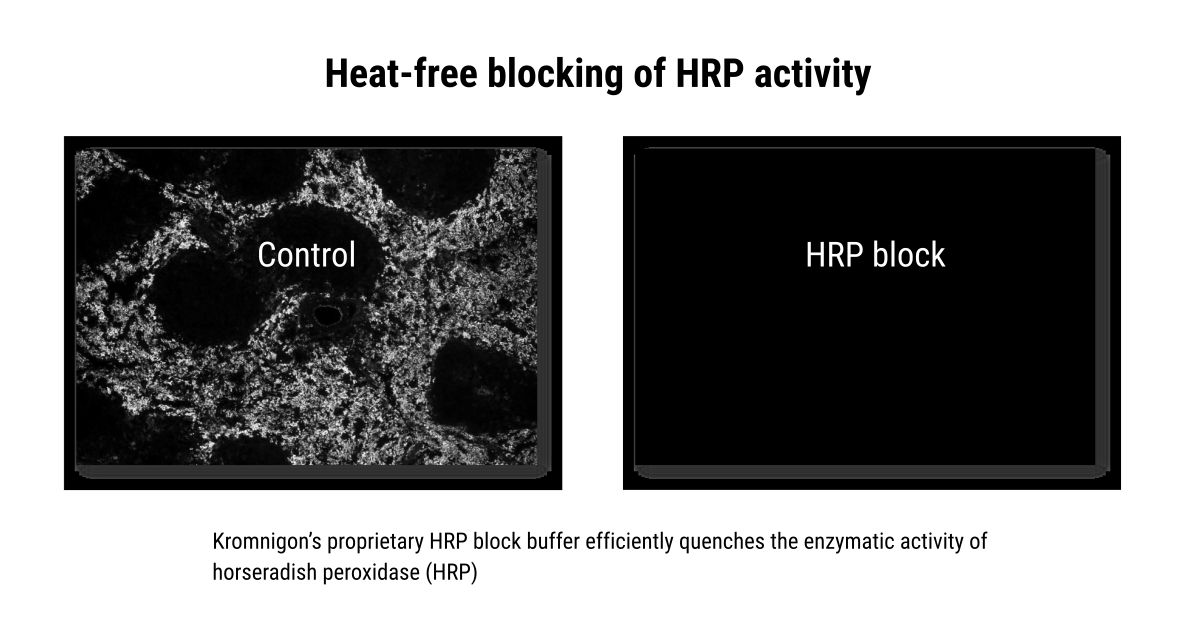
In summary, the workflow combines primary antibodies premixed with StreptaClick® HRP and a proprietary HRP block buffer to enable fast, heat-free sequential TSA for immunofluorescence. The tissue-preserving nature of the workflow ensures consistent staining conditions from the first to the last cycle.
A workflow built for FFPE, frozen tissue, and automation
Heat stripping is particularly problematic for tissue morphology and epitope stability. This becomes a limiting factor when multiplexing beyond 4–5 targets and makes it impossible to use on frozen tissues.
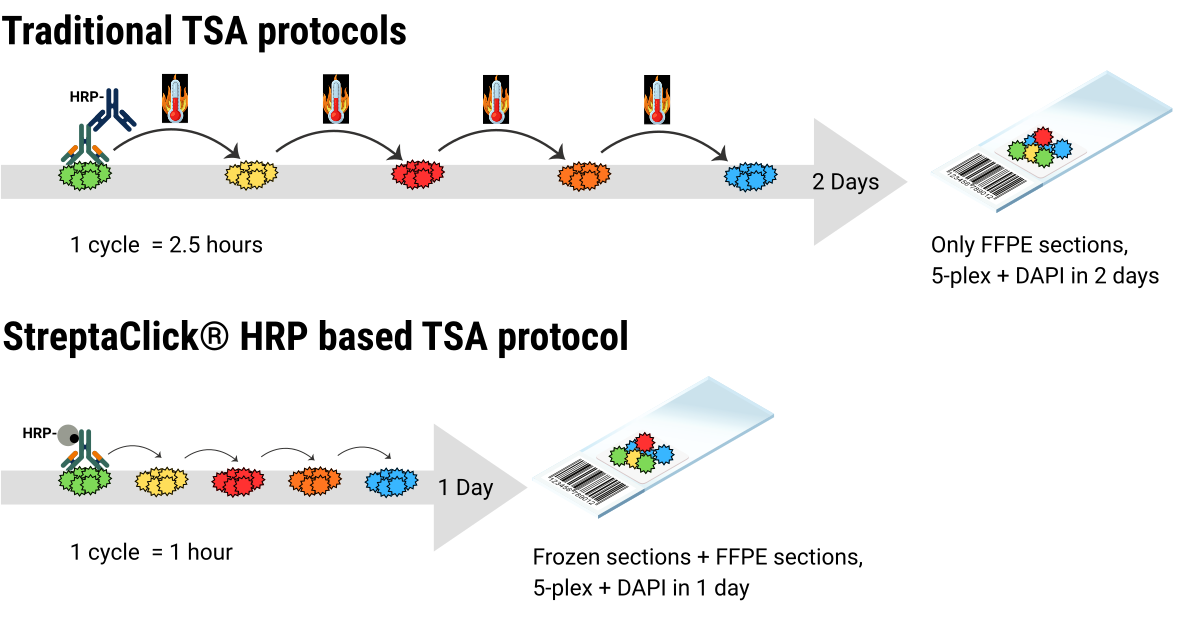
The heat-free multiplex TSA workflow alleviates both these limitations and can be used for as many dyes that can be spectrally separated by the microscopy system. Importantly, as there is no heat treatment between the cycles the time-consuming optimization of the order in which the primary antibodies should be used, is also removed.
Heat-induced epitope retrieval can be used for FFPE tissues prior to the heat-free multiplex TSA with StreptaClick® HRP per standard protocols.
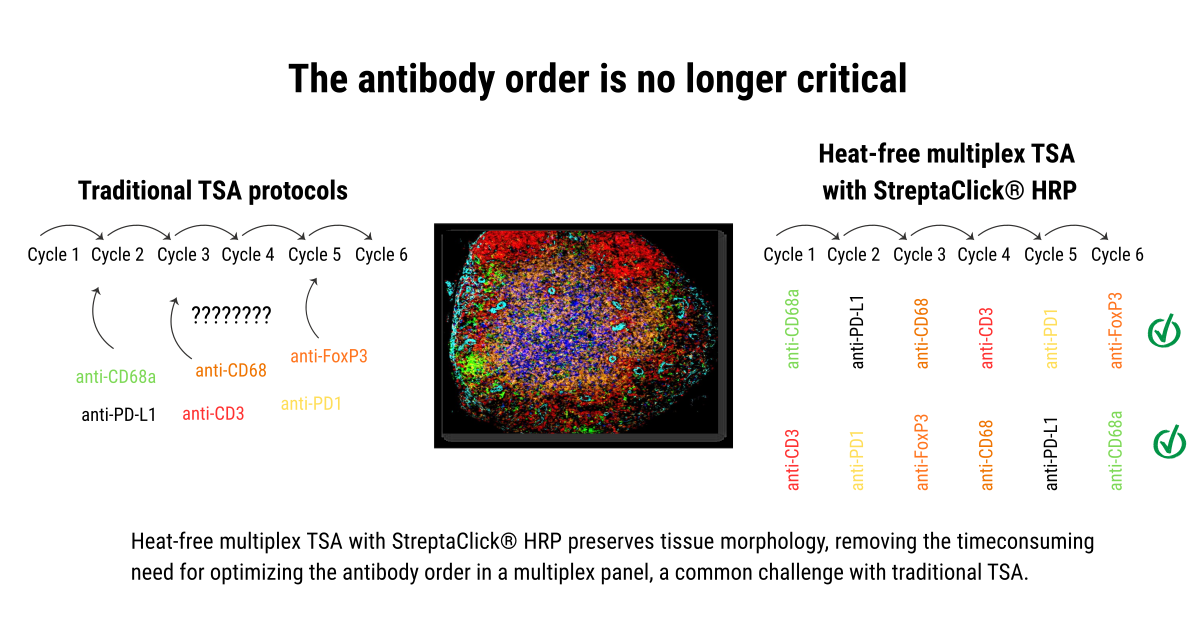
The workflow is significantly faster than traditional TSA for manual staining, and is also well-suited for automation and compatible with autostainers. Automation-ready protocols are available, including validated workflows on Leica Biosystems BOND RX, with additional platforms in development.
StreptaClick® HRP Workflow

Key advantages
The StreptaClick® HRP workflow transforms TSA staining into a heat-free, faster, and simpler process for both manual and automated applications, offering four key advantages over conventional protocols:
- Significantly shortened TSA workflow. The StreptaClick® technology eliminates the use of secondary antibodies, accelerating the protocol while maintaining full flexibility in primary antibody species selection.
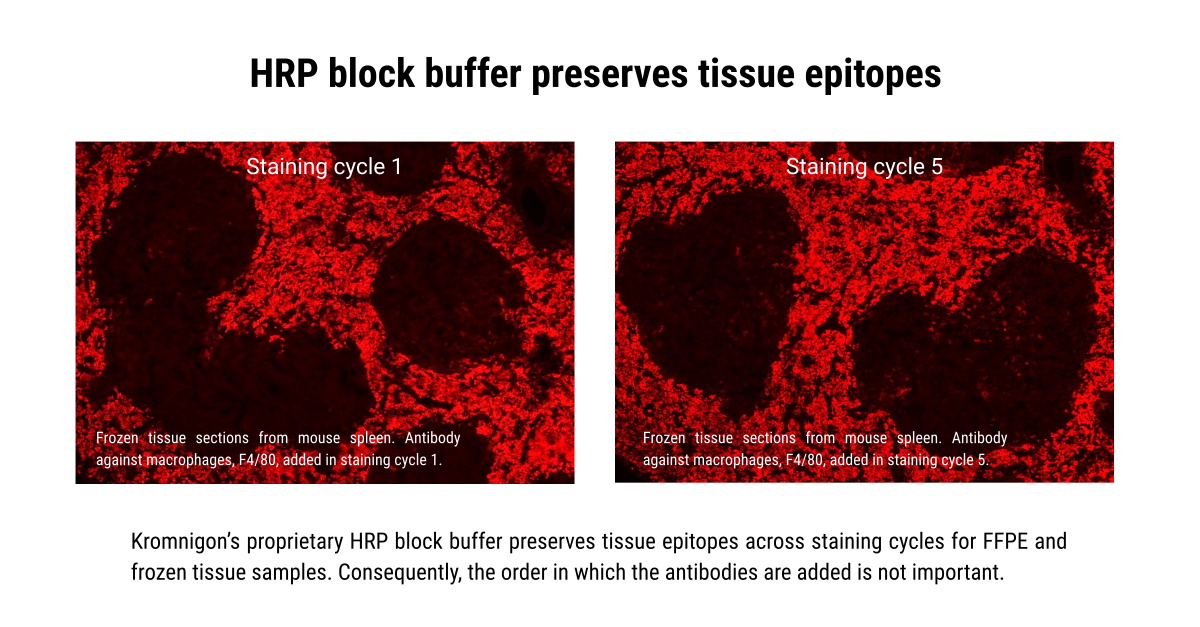
- A heat-free workflow that preserves epitopes and tissue morphology. The proprietary HRP block buffer is specifically optimized to ensure efficient HRP inactivation while maintaining optimal tissue integrity – even on frozen tissue sections.
- Improved resistance to tyrosine depletion. The heat-free workflow does not strip off antibodies. As a result, new tyrosine residues are incorporated into the tissue with each antibody, making the method less susceptible to tyrosine depletion.
- Easy multiplex panel setup. By reducing epitope exhaustion and tyrosine depletion, the staining conditions remain more consistent across cycles. Consequently, the order of antibodies does not need to be optimized, which saves considerable time when establishing new panels.

Optimized tyramide dyes
Because TSA enzymatically anchors fluorophores around the antibody, the resulting signal can be substantially stronger than direct conjugates—typically enabling 5–10× higher intensity depending on target abundance and tissue background.
For heat-free multiplex TSA, Kromnigon provides a selection of optimized tyramide dyes chosen for brightness and high signal-to-noise ratio. This helps maximize image quality and scanning efficiency across multiplex panels. All tyramide dyes match Kromnigon’s SpectraSplit® filter sets.
The heat-free multiplex TSA workflow with StreptaClick® also supports additional tyramide dye options.
Imaging without spectral unmixing
For reliable imaging of tissue samples multistained with TSA-based immunofluorescence, effective spectral separation becomes increasingly important as the plex level increases. Kromnigon’s SpectraSplit® filter sets are designed to effectively separate commonly used fluorochromes directly in the optics, minimizing spectral overlap and removing the need for algorithm-based correction.
The fluorochromes included in Kromnigon’s multiplex TSA kits are selected to work optimally with SpectraSplit®, enabling reliable optical separation of all tyramide dyes in the kit without computational post-processing. Kromnigon’s tyramide dyes can also be used without SpectraSplit®, but care must be taken regarding the microscope’s capacity to separate multiple fluorochromes. In general, most microscopes can separate DAPI, 488, 555, 647, and 750.
| Channel | Traditional dyes | StreptaClick® tyramide dyes |
| S-Split Blue (375) | DAPI | DAPI |
| S-Split Cyan (435) | CFP | Tyramide CF®430 |
| S-Split Green (490) | FITC | Tyramide 488 |
| S-Split Orange (545) | Cy3/TRITC | Tyramide 555 |
| S-Split Red (590) | Texas Red | Tyramide 594 |
| S-Split Far-red (650) | Cy5/Cy5.5 | Tyramide 647 |
| S-Split Infra-red (740) | Cy7 | Styramide iFluor 750 |

BiotinPure™ Antibody Biotinylation Kit
Request a quote or order
Request a quote or order with payment by invoice by sending us an email via the button above. When ordering, please include information on the products you wish to order, organization, VAT number (only EU countries), delivery address, and invoice address. Please also state contact person and phone number for delivery by courier. We ship globally - a shipping cost of €50 is added to countries within the EU and €80 to all other countries. Upon request we can also charge in $USD for payments by invoice.Webshop
Orders can also be placed through our webshop via the form below. Once a product has been added a popup will appear with the choice of proceeding to checkout or adding additional products. The shopping cart icon at the top right corner also takes you to checkout. At checkout you will have the choice of secure payment by credit card via Stripe, Apple Pay, Google Pay or invoice. Shipping charges are added automatically. NB: VAT is not added to the final cost under Article 138 VAT directive (other EU countries) and 146 VAT directive (export to non-EU countries). Select your BiotinPure™ Kit:
SpectraSplit® 10 filter sets


SpectraSplit® 7
Request a quote or order
Request a quote or order with payment by invoice by sending us an email via the button above. When ordering, please include information on the products you wish to order, organization, VAT number (only EU countries), delivery address, and invoice address. Please also state contact person and phone number for delivery by courier. We ship globally – a shipping cost of €50 is added to countries within the EU and €80 to all other countries. We can also charge in $USD. NB: VAT is not added to the final cost under Article 138 VAT directive (other EU countries) and 146 VAT directive (export to non-EU countries).
StreptaClick® 8-plex for ZEISS Axioscan 7 spatial biology


StreptaClick® Color
Request a quote or order
Request a quote or order with payment by invoice by sending us an email via the button above. When ordering, please include information on the products you wish to order, organization, VAT number (only EU countries), delivery address, and invoice address. Please also state contact person and phone number for delivery by courier. We ship globally – a shipping cost of €50 is added to countries within the EU and €80 to all other countries. Upon request we can also charge in $USD for payments by invoice.Webshop
Orders can also be placed through our webshop via the form below. Once a product has been added a popup will appear with the choice of proceeding to checkout or adding additional products. The shopping cart icon at the top right corner also takes you to checkout. At checkout you will have the choice of secure payment by credit card via Stripe, Apple Pay, Google Pay or invoice. Shipping charges are added automatically. NB: VAT is not added to the final cost under Article 138 VAT directive (other EU countries) and 146 VAT directive (export to non-EU countries). Select your StreptaClick® Color Kit:

